
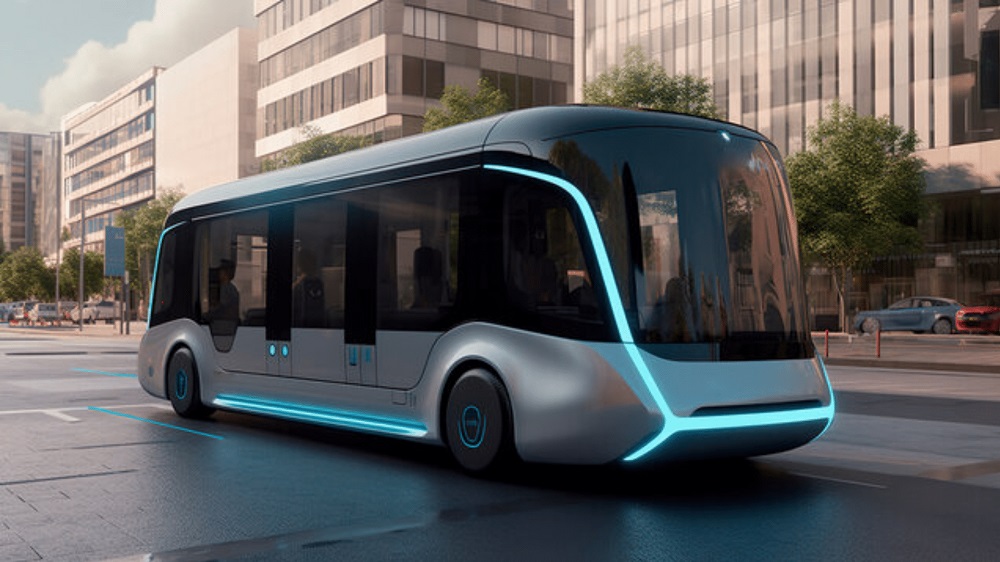

The global transport sector is undergoing its most profound transformation since the internal combustion engine replaced horses in the early twentieth century. Automotive innovations are no longer restricted to incremental horsepower boosts, minor body restyling, or luxury interior trims. Modern mobility is defined by software integration, electrification, autonomous computing, and sustainable manufacturing practices.
As urban centers expand and the necessity for carbon neutrality becomes critical, vehicles are transitioning from isolated mechanical machines into connected, intelligent computing nodes on wheels. Understanding these breakthroughs reveals how personal mobility, commercial logistics, and public transit will operate in the decades ahead.
The Acceleration of Electrification and Battery Architecture
Electric vehicles have moved from a niche market segment to the primary focus of major global automakers. The transition away from internal combustion engines relies heavily on advances in energy storage technology, charging infrastructure, and power electronics.
Advanced Battery Chemistry and Solid-State Breakthroughs
Traditional lithium-ion batteries have reached high levels of commercial viability, yet engineers continue to tackle challenges regarding energy density, charge times, and raw material dependence. Lithium iron phosphate chemistry has gained widespread adoption due to its lower production costs, enhanced thermal stability, and elimination of nickel and cobalt.
The next leap forward involves solid-state batteries. By replacing liquid electrolytes with solid ceramic or polymer materials, solid-state designs offer distinct operational advantages:
-
Higher Energy Density: Allows vehicles to travel significantly farther on a single charge without increasing overall weight.
-
Faster Charging Speeds: Enables pack replenishment in minutes rather than hours by reducing internal heat build-up.
-
Enhanced Safety: Eliminates flammable liquid electrolytes, dramatically reducing fire risks during collision events.
Ultra-Fast Charging Networks and Grid Integration
Vehicle performance represents only half of the electrification equation. Charging speed and accessibility remain paramount for long-distance transit. Modern high-power direct current chargers now supply power at rates exceeding three hundred kilowatts, restoring substantial range within short rest stops.
Bi-directional charging technology, commonly known as vehicle-to-grid integration, enables electric cars to function as mobile energy storage units. During periods of peak electrical demand, parked vehicles can discharge excess power back into the public grid, stabilizing localized power distribution and providing emergency backup power for residential homes.
Autonomous Driving and Intelligent Perception Systems
Self-driving technology aims to eliminate human error, which accounts for the vast majority of worldwide traffic accidents. Achieving full autonomy requires a sophisticated combination of high-performance sensors, onboard edge computing, and real-time decision algorithms.
Multi-Sensor Fusion
Automotive engineers rely on sensor fusion to construct an accurate three-dimensional map of a vehicle’s surroundings. No single sensor performs perfectly across all atmospheric conditions, making redundancy essential.
-
LiDAR Systems: Emits laser beams to measure distances with millimeter precision, creating dense point-cloud representations of physical environments.
-
Radar Sensors: Penetrates heavy rain, fog, and snow to detect object distances and relative speeds across long ranges.
-
Computer Vision Cameras: Captures high-resolution color imagery necessary to interpret traffic signals, road signs, and lane markings.
Software-Defined Vehicles and Edge Computing
Modern automobiles execute hundreds of millions of lines of software code. Software-defined vehicles decouple hardware specifications from functional upgrades, allowing manufacturers to improve driving dynamics, battery efficiency, and safety systems via over-the-air updates. High-throughput onboard central computers process gigabytes of sensor data per second, executing machine learning models that predict pedestrian movements and navigate complex intersection scenarios without latent delay.
Connected Infrastructure and Vehicle-to-Everything Communication
Autonomous capability operates best when vehicles share real-time data with surrounding infrastructure and nearby traffic. Vehicle-to-everything communication establishes a unified network where cars, signals, and pedestrian devices exchange vital spatial information.
Safety Through Collective Intelligence
Vehicle-to-vehicle protocols transmit velocity, direction, and braking status directly between nearby automobiles. If a lead vehicle applies emergency brakes around a blind curve, trailing cars receive instant alerts before the obstacle comes into direct visual range.
Vehicle-to-infrastructure connectivity pairs cars with traffic management centers. Traffic lights adjust phase timing based on real-time arrival counts, minimizing idle times at intersections and reducing urban emissions caused by unnecessary stop-and-go driving.
Smart Mobility Ecosystems
Connected transit systems extend beyond private passenger cars. Fleet managers utilize real-time telemetry to track energy consumption, schedule predictive maintenance, and optimize delivery routes. Public transit buses receive signal priority along high-density corridors, improving schedule reliability and encouraging public ridership over individual car ownership.
Sustainable Materials and Circular Manufacturing
True environmental sustainability requires looking beyond zero tailpipe emissions. Automobile manufacturers are auditing the complete lifecycle of their products, from raw material extraction through end-of-life recycling.
Recycled and Bio-Based Interiors
Vehicle interiors are adopting plant-based textiles, recycled ocean plastics, and synthetic leather alternatives derived from agricultural byproducts. Natural fiber composites made from hemp or flax replace traditional plastic door panels, lowering vehicle weight while reducing reliance on petroleum-derived polymers.
Closed-Loop Manufacturing and Battery Recycling
Automotive manufacturing facilities are converting to renewable energy sources to achieve net-zero carbon operations. Simultaneously, battery recycling infrastructure is scaling rapidly to recover critical minerals like lithium, cobalt, nickel, and manganese from decommissioned battery packs. Hydro-metallurgical recycling processes yield battery-grade material with purity levels matching freshly mined ore, closing the resource loop and protecting supply chains.
Micro-Mobility and Urban Spatial Redesign
The evolution of automotive technology is altering how city planners design urban spaces. As shared electric mobility services expand, urban spaces previously dedicated to massive parking structures are being reallocated for green spaces and pedestrian walkways.
Electric micro-mobility units, such as light cargo delivery vehicles and shared bikes, complement larger passenger cars by solving the first-mile and last-mile transit challenges in dense downtown corridors. Automated fleet dispatching ensures vehicles congregate where transit demand is highest, reducing overall vehicle counts while maintaining high transit availability.
The Horizon of Advanced Air and Underground Transit
Innovations born within the traditional automotive space are spilling over into alternative transportation modes. Advances in electric propulsion, high-capacity batteries, and lightweight composite materials have enabled the development of electric vertical takeoff and landing aircraft. These aerial shuttles aim to bypass ground-level traffic bottlenecks in major metropolitan areas, providing rapid point-to-point regional transit.
Concurrently, automated tunneling projects explore high-speed underground transit tubes designed to transport electric vehicles or mass transit pods beneath urban centers. By shifting high-density traffic into subterranean networks, cities can recover surface space for public use.
Frequently Asked Questions
What is the primary difference between standard electric vehicles and solid-state battery vehicles?
Standard electric vehicles utilize liquid or gel electrolytes to move ions between electrodes during charging and discharging. Solid-state battery vehicles replace liquid components with solid materials like ceramics or polymers, providing higher energy density, faster charging capability, and reduced fire risks.
How do software-defined vehicles receive new features after purchase?
Software-defined vehicles receive updates wirelessly over cellular or network connections. Manufacturers push software packages directly to the vehicle’s central processing system, improving safety features, power efficiency, and infotainment capabilities without requiring a physical service visit.
Why is sensor fusion necessary for autonomous driving?
No individual sensor works reliably under all environmental conditions. Cameras capture visual context like signs and lane lines, LiDAR provides exact spatial depth, and radar functions through adverse weather like heavy rain or fog. Sensor fusion combines data from all three sources to create a complete and accurate environment map.
How does vehicle-to-everything communication improve road safety?
Vehicle-to-everything communication allows vehicles to exchange instantaneous speed, location, and braking data with other cars, traffic signals, and road infrastructure. This real-time spatial awareness alerts drivers or autonomous systems to potential hazards before they become visible to human eyes or camera sensors.
What happens to electric vehicle batteries when they reach the end of their operational life?
When electric vehicle batteries degrade below optimal automotive capacity, they are either repurposed for stationary energy storage systems or sent to specialized recycling facilities. Recyclers extract valuable raw minerals like lithium, nickel, and cobalt to manufacture new battery cells, creating a sustainable material cycle.
How does bi-directional charging benefit individual vehicle owners?
Bi-directional charging allows an electric vehicle to act as a temporary power source. Vehicle owners can use energy stored in their car battery to power their home during electrical outages or feed energy back into the power grid during peak rates to earn financial credits.
Will widespread vehicle electrification overburden current public power grids?
Grid overload is managed through smart charging protocols, off-peak charging incentives, and vehicle-to-grid energy storage systems. By charging vehicles during overnight low-demand periods and utilizing bi-directional energy management, electric vehicles can actually help stabilize the electrical grid rather than overload it.
Comments are closed.